
Why Trump Buildings Always Feel Like Power
- Mark Jones
- May 24
- 4 min read
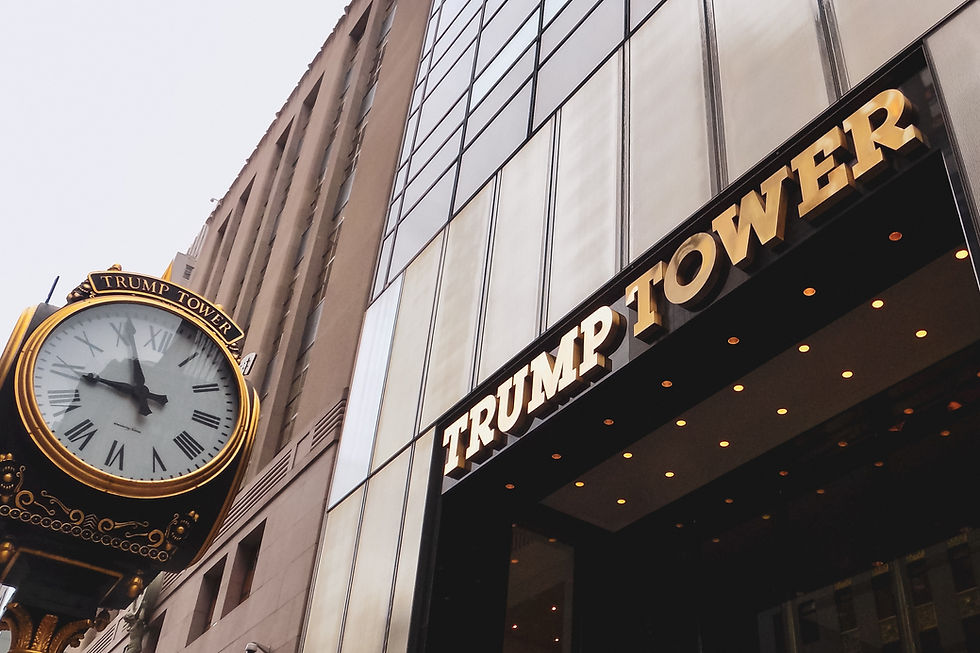
Some buildings are designed to disappear into a skyline. Others are designed to dominate it. For decades, buildings associated with The Trump Organization have followed a very specific architectural philosophy—one rooted in visibility, scale, and the unmistakable performance of luxury. Whether in New York, Dubai, Miami, or Gurgaon, the emotional reaction these buildings create tends to be immediate. They feel grand, commanding and intentional. They feel powerful.
Regardless of how people view the Trump brand culturally or politically, the architecture itself reveals something important about modern luxury: people are still deeply attracted to spaces that visibly communicate status because architecture has never been just about buildings. It has always been about aspiration.
The Original Trump Luxury Formula
Long before “quiet luxury” became the dominant design language, Trump-branded buildings represented a more theatrical version of aspiration. This architectural style emerged from a world where luxury was meant to be seen instantly. Reflective towers, polished marble, oversized atriums, dramatic lighting, gold-toned finishes, and monumental entrances all worked together to create a feeling of arrival.
The goal was never subtlety. It was impact. This is what made many Trump properties culturally recognizable. The buildings were designed less like neutral architecture and more like statements of success. Their scale and materials communicated wealth before a person even entered the space and psychologically, that approach works.
People instinctively respond to environments that feel larger, brighter, and more visually dominant. Grand architecture creates emotional hierarchy. It changes posture, behavior, and perception. In this sense, Trump buildings borrowed from the same principles used historically in palaces, casinos, luxury hotels, and financial institutions: when a space feels monumental, it also feels important.
Why These Buildings Still Feel Different Today
What makes Trump architecture especially interesting now is how sharply it contrasts with current luxury aesthetics. Modern premium design has shifted toward restraint. Warm minimalism, textured stone, indirect lighting, and emotionally calming spaces dominate contemporary luxury interiors. Brands like Aman helped redefine luxury around silence, atmosphere, and sensory calm rather than visible spectacle. But Trump buildings operate differently.
They continue embracing a more visible and performative expression of luxury—one where architecture is designed to project success outwardly rather than soften into the background. This contrast explains why Trump properties still feel emotionally intense compared to many contemporary developments. They are not trying to disappear into “tasteful minimalism.” They are trying to create presence.
Globally, there is still a strong market for that feeling. Because even as quiet luxury dominates design media, aspirational culture itself has not disappeared. In many parts of the world, people still associate scale, shine, and visibility with achievement. Architecture simply reflects that reality.
The Psychology Behind Powerful Spaces
One reason Trump buildings leave such a strong impression is because they understand spatial psychology extremely well. Large ceilings create importance, reflective materials create drama symmetry creates order and monumental entrances create anticipation. These architectural decisions influence emotion subconsciously.
Luxury real estate developers increasingly understand that buildings are not sold through floor plans alone. They are sold through atmosphere. The feeling someone experiences in the first thirty seconds of entering a space often shapes perception more than technical specifications ever could. This is why the lobby matters so much in premium real estate.
Trump-branded lobbies are rarely understated. They are designed like theatrical arrival experiences. Stone, lighting, scale, and reflective surfaces are orchestrated to create immediate emotional impact. The building is introducing its identity before a word is spoken and in today’s experience-driven economy, that emotional branding has become incredibly valuable.
From Buildings to Lifestyle Ecosystems
One of the biggest misconceptions about Trump real estate is that it remains frozen in the luxury language of the 1980s or 1990s. In reality, the brand’s newer global developments are evolving significantly. Across regions such as Dubai, Saudi Arabia, India, Oman, Vietnam, and the Maldives, newer Trump projects increasingly combine branded residences, hospitality experiences, golf communities, wellness-driven amenities, and mixed-use lifestyle environments. This reflects a much broader shift happening across global luxury real estate.
Modern developers are no longer simply selling apartments or hotel rooms. They are selling fully designed ecosystems of aspiration—places where architecture, hospitality, wellness, exclusivity, and branding operate together. In many ways, Trump-branded projects are now functioning less like standalone towers and more like lifestyle platforms. That evolution is important because it shows how luxury architecture itself is changing. The future of premium real estate is no longer just about owning space. It is about belonging to an experience.
Why the Trump Design Language Still Works Globally
One reason the Trump Organization continues expanding internationally is because its architectural language translates easily across aspirational luxury markets. Visible prestige remains globally understandable.
A dramatic skyline tower in Dubai, a golf-integrated luxury development in Saudi Arabia, or a branded residence in India all communicate a similar emotional promise: success made physical. This is especially relevant in rapidly growing luxury markets where architecture still plays a strong symbolic role in social identity. Buildings become markers of ambition, lifestyle, and global belonging.
Developers across the world—not just Trump-branded projects—continue using architecture in this way. Popular companies also understand the power of large-scale aspirational environments that combine real estate with hospitality, retail, and lifestyle branding. The difference is that Trump properties often push this visual signaling more aggressively and more visibly than most contemporary luxury brands and that is precisely why they remain recognizable.
The Future of Visible Luxury
The most interesting question surrounding Trump architecture today is not whether people personally prefer the aesthetic, it is whether visible luxury itself is disappearing. The answer appears to be no.
Luxury is diversifying rather than moving in one direction. Quiet minimalism dominates one side of the market, while highly expressive architecture continues thriving in another. Some consumers want spaces that feel calm and private. Others want environments that feel cinematic, powerful, and unmistakably aspirational. Both are forms of status.
Architecture remains one of the strongest ways status is communicated physically. This is why buildings associated with the Trump Organization continue to matter culturally within design conversations. They represent a version of luxury that refuses invisibility.
Even in an era obsessed with understatement, there is still enormous emotional power in architecture that announces itself confidently because ultimately, people do not only respond to buildings rationally. They respond to what buildings symbolize and few forms of architecture symbolize ambition more directly than spaces designed to feel larger than life.



Comments