
Why the UK's Online Shopping Habits Are Changing Faster Than Ever


Online shopping in the United Kingdom has entered a new era. The conversation is no longer centered solely on convenience or fast delivery. Instead, British consumers are reshaping ecommerce through higher expectations around personalization, sustainability, digital experiences, and brand transparency.
For retailers, this shift represents both a challenge and an opportunity. The brands that succeed are no longer simply selling products—they are building digital experiences that feel intuitive, trustworthy, and culturally relevant. As technology continues to evolve and consumer expectations rise, understanding the UK's online shopping trends has become essential for brands looking to compete in one of Europe's most mature ecommerce markets.
Personalization Has Become the New Standard
British consumers increasingly expect online shopping experiences that feel tailored to their individual preferences. Generic product recommendations and mass email campaigns are rapidly giving way to AI-driven personalization that reflects browsing behavior, purchase history, and customer interests.
Retailers are investing heavily in recommendation engines, virtual shopping assistants, and predictive analytics that make online browsing feel more personal. Rather than overwhelming customers with thousands of choices, brands are learning to curate experiences that simplify decision-making.
Companies such as ASOS and John Lewis continue to refine their digital platforms, recognizing that relevance has become one of ecommerce's most valuable currencies. Consumers increasingly reward brands that understand their needs rather than simply promoting more products. Personalization is no longer viewed as an added feature. It has become an expectation.

Sustainability Is Influencing Purchasing Decisions
Sustainability has evolved from a marketing message into a purchasing consideration. Across the UK, shoppers are paying closer attention to how products are manufactured, packaged, and delivered. Ethical sourcing, recyclable packaging, and transparent supply chains increasingly influence buying decisions, particularly among younger consumers.
This shift reflects a broader cultural movement towards more conscious consumption. Rather than purchasing solely based on price, many customers now consider the environmental and social impact of their purchases.
Retailers have responded by investing in recycled materials, carbon-conscious delivery options, and greater transparency throughout the supply chain. Brands that communicate these initiatives authentically are often better positioned to build long-term customer trust than those relying solely on promotional campaigns.

Social Commerce Is Redefining Product Discovery
The traditional online shopping journey is changing. Consumers no longer discover products exclusively through search engines or retail websites. Platforms such as Instagram and TikTok have become powerful retail channels where inspiration, entertainment, and commerce increasingly overlap.
A short-form video demonstrating a product can now generate more engagement than a conventional advertising campaign. Influencers, creators, and user-generated content have become essential parts of the purchasing journey, allowing consumers to see products in everyday settings before making buying decisions.
This transformation has encouraged brands to think beyond traditional ecommerce. Content has become commerce and retailers that create engaging visual storytelling often enjoy greater visibility and stronger customer engagement than those relying solely on product listings.
Technology Is Quietly Transforming UK Ecommerce
Artificial intelligence is becoming one of the most influential forces shaping online retail. AI-powered customer service, intelligent search, demand forecasting, and personalized recommendations are helping retailers improve both operational efficiency and customer experience.
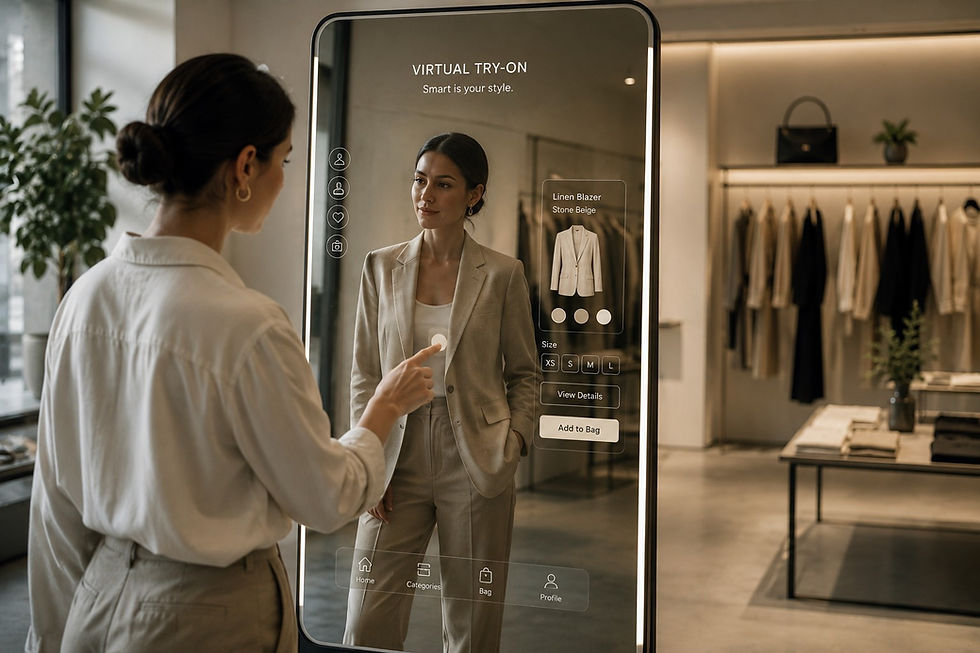
At the same time, technologies such as augmented reality are reducing uncertainty during online purchases by allowing customers to visualize products before buying. Furniture retailers can demonstrate how a sofa fits inside a living room, while beauty brands increasingly offer virtual product try-ons that make digital shopping feel more interactive.
These innovations are gradually making online retail more immersive, reducing returns while increasing consumer confidence. Technology is no longer replacing the shopping experience; it is enhancing it.
Trust Has Become Ecommerce's Most Valuable Currency
As online shopping becomes increasingly sophisticated, trust is emerging as one of the industry's most valuable competitive advantages. Consumers want clear return policies, secure payment systems, transparent pricing, and honest communication. They also expect brands to handle personal data responsibly while maintaining consistent service across websites, mobile apps, and social platforms.
Retailers that invest in long-term customer relationships rather than short-term transactions are increasingly distinguishing themselves in an intensely competitive market. In many ways, trust has become as important as price.
The Future of UK's Online Shopping
The UK's ecommerce market continues to evolve at remarkable speed, shaped by advances in technology and changing consumer expectations. The next generation of successful retailers will not necessarily be those offering the widest selection or the fastest discounts. Instead, leadership will belong to brands capable of delivering personalized experiences, demonstrating genuine sustainability commitments, embracing digital innovation, and earning lasting customer trust.
Online shopping is becoming less transactional and more experiential. Consumers increasingly expect retailers to understand their preferences, reflect their values, and provide seamless experiences across every digital touchpoint.
For businesses operating in the UK, the challenge is no longer simply keeping pace with technological change, it is understanding the people driving it. As consumer expectations continue to rise, brands that combine innovation with authenticity will be best positioned to define the next chapter of British ecommerce.


Comments