
Why the Best Clubhouse Can Sell an Entire Residential Project

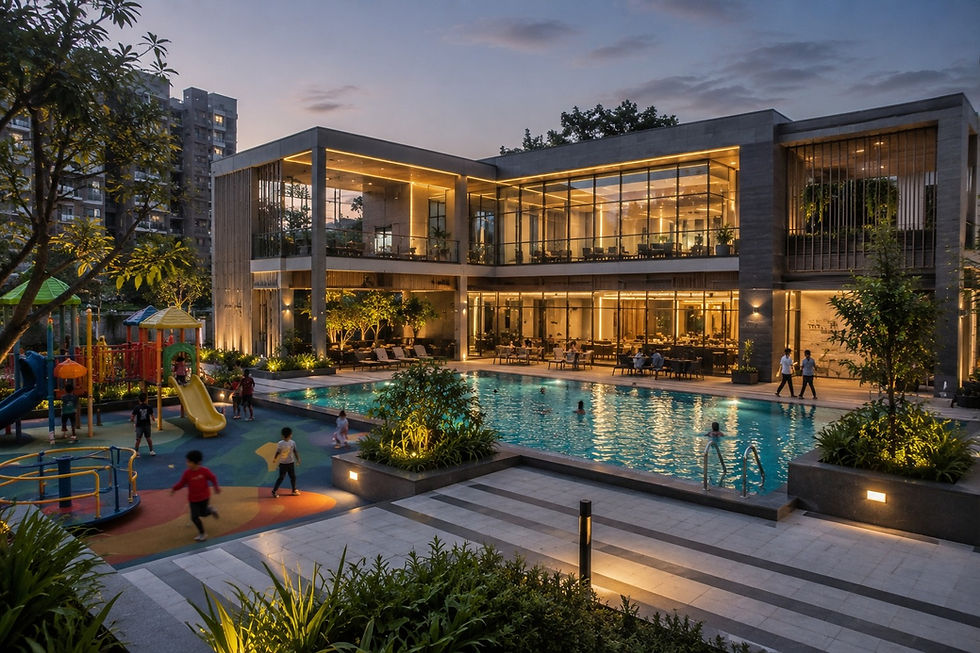
There was a time when buyers judged a residential project by the apartment itself. The size of the living room, the number of bedrooms and the view from the balcony. Today, that equation is changing.
Increasingly, some of the most important decisions happen before a buyer even sees the apartment. They happen in the clubhouse, the lobby, the co-working lounge, the wellness center, or the rooftop terrace. In many modern developments, these shared spaces have become the emotional heart of the project—and often the deciding factor behind a sale. The apartment may still be the product, but the clubhouse has become the lifestyle and for developers, that changes everything.
The Apartment Is No Longer Enough
Over the past decade, residential real estate has become significantly more competitive. New projects often offer similar layouts, similar amenities, and similar locations. As a result, developers have been forced to look beyond square footage to create differentiation, and the answer has been experience.
Buyers today are not only purchasing a home. They are purchasing a vision of how they will live. They want convenience, community, wellness, flexibility, and access to experiences that once existed outside residential developments. This shift has transformed the role of shared spaces. What was once considered an optional amenity has become a strategic selling tool.
The Clubhouse Has Become the New Social Center
One of the most significant changes in residential design is the emergence of the clubhouse as a modern gathering place. Historically, cities relied on public spaces for social interaction. Cafés, parks, community centers, and clubs played an important role in bringing people together.
Today, many residential developments are recreating those functions within their own boundaries. Clubhouses increasingly include lounges, cafés, co-working spaces, event rooms, fitness facilities, children's areas, gaming rooms, libraries, and wellness zones. Rather than serving a single purpose, they operate as miniature social ecosystems.
For residents, this means daily life becomes more convenient. For developers, it creates something even more valuable: a sense of community. And community is increasingly becoming a luxury.
Why Buyers Fall in Love With Amenities First
Real estate has always been emotional. People rarely buy homes based purely on logic. They buy based on how a space makes them imagine their future. This is why clubhouses play such a powerful role in sales. A beautifully designed clubhouse allows prospective buyers to visualize a lifestyle immediately. They can imagine morning workouts, weekend gatherings, remote work sessions, children's activities, and social events long before they imagine where the sofa might go inside the apartment. The clubhouse tells a story.
The apartment answers practical questions but the clubhouse answers emotional ones. That distinction is incredibly important because emotional connection often drives purchasing decisions more strongly than specifications alone.
Hospitality Is Reshaping Residential Design
The influence of hospitality can be seen almost everywhere in modern real estate. Luxury hotels spent decades perfecting the art of creating atmosphere. They learned how lighting, materials, furniture, service, and spatial flow could shape perception and influence behavior.
Residential developers have been paying close attention. Today, many premium projects borrow directly from hospitality design. Lobbies resemble boutique hotel lounges, wellness centers feel like private spas, rooftop areas function like resort amenities and concierge services are becoming increasingly common.
The goal is not simply to provide facilities. The goal is to create an experience that feels elevated. This hospitality-driven approach reflects a broader shift in consumer expectations. People increasingly compare residential environments not just to other homes, but to hotels, resorts, and lifestyle destinations. As a result, the clubhouse has become one of the most visible expressions of that transformation.

The Economics Behind Great Shared Spaces
From a business perspective, investing in clubhouses and amenities can be remarkably effective. A strong clubhouse creates a memorable first impression. It helps projects stand out in crowded markets. It increases perceived value, strengthens branding and can even justify premium pricing. Most importantly, it changes the conversation.
Instead of competing solely on apartment size or price per square foot, developers begin competing on lifestyle. This is why many of the world's most successful residential projects devote substantial resources to shared spaces. Developers understand that buyers are increasingly attracted to environments rather than individual units.
In many cases, the clubhouse becomes the project's most powerful marketing asset. It is the space featured in brochures, advertisements, walkthrough videos, and sales presentations because it communicates something larger than architecture. It communicates aspiration.
The Future of Residential Communities
As cities continue growing and lifestyles become more flexible, shared spaces are likely to become even more important. Remote work has increased demand for co-working lounges. Wellness culture has increased demand for fitness and recovery spaces. Families seek environments that support both privacy and community. Younger buyers increasingly value experiences over ownership alone.
All of these trends point in the same direction. The future of residential design is not just about individual homes. It is about creating complete living ecosystems. Developers are no longer simply building apartments, they are designing communities and within those communities, the clubhouse has emerged as something far more significant than an amenity. It has become the place where residents work, socialize, relax, connect, and experience the lifestyle that attracted them to the project in the first place. Which is why the best clubhouse often does more than support a residential development, it helps sell the entire vision.





Comments