
The Subscription Economy: Sustainable Model or Consumer Fatigue?

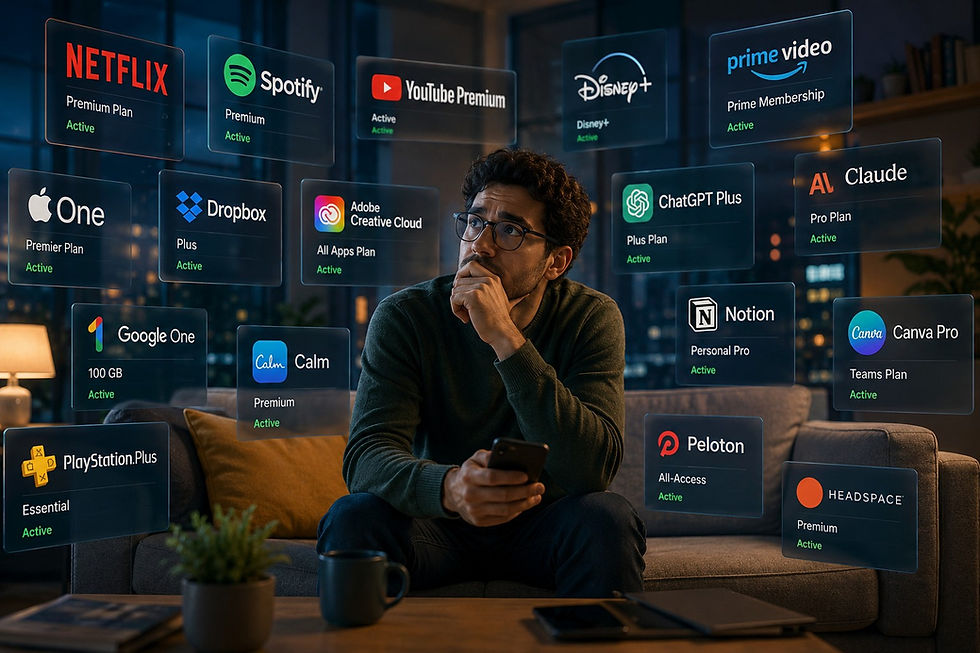
There was a time when subscriptions occupied a relatively small part of everyday life. People subscribed to newspapers, magazines, gym memberships, and perhaps a television package. Most products and services, however, were purchased outright. Ownership was the default model.
Today, the relationship between consumers and businesses looks very different. Streaming platforms, software tools, cloud storage, productivity apps, gaming services, fitness platforms, meal subscriptions, beauty boxes, digital media, and increasingly artificial intelligence tools all operate on recurring models. Even products that were traditionally purchased once are now being reimagined as ongoing services.
The subscription economy has quietly become one of the defining business models of the digital age. For companies, the appeal is obvious. Subscriptions create recurring relationships rather than one-time transactions. They offer predictability, deeper customer engagement, and the opportunity to continuously deliver new features and services.
But a new question is beginning to emerge. Can consumers continue to absorb an ever-growing number of subscriptions, or is the model approaching its first real moment of fatigue? The answer may determine the future of some of the world's most influential businesses.
How Everything Became a Subscription
The rise of the subscription economy did not happen overnight. It was driven by a broader shift in how technology changed consumer expectations. The internet made continuous delivery possible. Software no longer needed to be installed from physical media. Entertainment no longer depended on ownership of DVDs or CDs. Services could be updated instantly and delivered continuously through the cloud. This fundamentally changed the relationship between businesses and customers.
Companies realized that subscriptions offered something traditional sales models could not: an ongoing connection. Instead of waiting for customers to return for their next purchase, businesses could become a permanent part of their daily lives. The model spread rapidly. Streaming services transformed entertainment. Software companies transitioned from one-time licenses to cloud-based subscriptions. Fitness brands launched digital memberships. Media organizations developed subscriber-only content. Gaming companies introduced premium services and content libraries.
Eventually, the subscription model moved beyond digital products altogether. Consumers began subscribing to curated experiences, convenience services, and personalized offerings. The logic was compelling. As long as businesses could continue delivering value, customers would remain engaged. For many years, this seemed like an almost unstoppable trend, but every successful business model eventually encounters a new challenge: saturation.
The Rise of Subscription Fatigue
Consumers today are managing more recurring relationships than ever before. A single person may use multiple streaming platforms, productivity applications, cloud services, digital publications, fitness memberships, and communication tools. Increasingly, many of these services feel essential rather than optional.
The problem is not that individual subscriptions lack value. The problem is accumulation. Each service asks for a small commitment. Taken together, these commitments can create a sense of overload. People are increasingly forced to make choices about which subscriptions deserve a place in their lives and which can be abandoned. This phenomenon is often described as subscription fatigue.
It is not necessarily a rejection of subscriptions themselves. Rather, it is a growing awareness that attention, time, and willingness to manage recurring services are finite resources. Consumers are becoming more selective. Many rotate between entertainment platforms rather than maintaining every service simultaneously. Others regularly audit their digital subscriptions, eliminating products they use less frequently. Increasingly, people are asking a simple question: Do I genuinely need another subscription?
For businesses, this question represents a significant challenge. The subscription economy was built on the assumption that consumers would continue adding services indefinitely. But there may be practical and psychological limits to how many recurring relationships people are willing to maintain.
AI Is Creating an Entirely New Subscription Layer
Just as subscription fatigue is becoming a topic of discussion, artificial intelligence is introducing an entirely new category of recurring services. Only a few years ago, most consumers did not have AI subscriptions. Today, millions of people subscribe to AI assistants, creative tools, coding platforms, research services, and productivity applications powered by artificial intelligence.
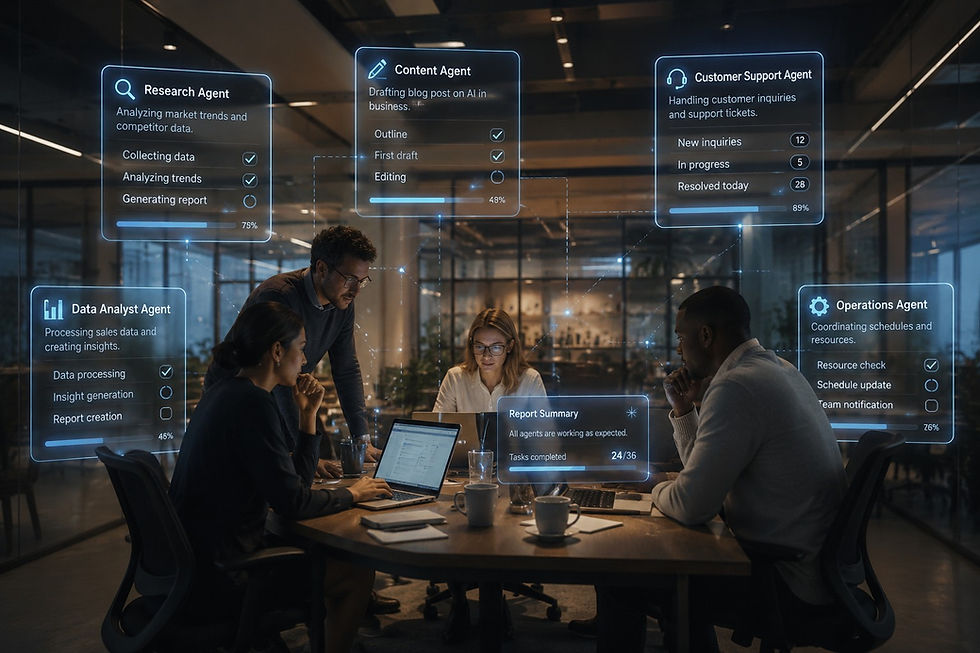
Businesses are also rapidly adopting enterprise AI services, integrating them into workflows, customer support, content creation, and decision-making processes. This new layer of subscriptions is particularly interesting because it often feels highly valuable. AI can save time, improve productivity, and enable entirely new capabilities. Yet it also adds another set of recurring relationships to an already crowded ecosystem.
The emergence of AI subscriptions raises a broader question about the future of digital services. Will consumers continue stacking subscriptions indefinitely, or will they begin consolidating around a smaller number of platforms that offer multiple capabilities within a single ecosystem? The answer may reshape the competitive landscape of the technology industry.
Artificial intelligence is not simply creating new products. It is creating new demands on consumer attention and loyalty, and those resources are not unlimited.

The Next Battle Will Be About Ecosystems, Not Individual Subscriptions
As the subscription market matures, the competitive advantage may shift away from standalone services and toward ecosystems. The companies most likely to succeed are not necessarily those with the greatest number of individual subscriptions. They may be the companies that make their subscriptions feel interconnected and indispensable. This is already happening across several industries.
Technology companies increasingly bundle services together, combining entertainment, productivity, cloud storage, communication tools, and now artificial intelligence capabilities into broader ecosystems. The objective is simple: reduce the likelihood that customers will leave.
A single subscription can be replaced relatively easily. An ecosystem is much harder to abandon. This shift could fundamentally change the next phase of the subscription economy. Rather than competing for individual subscriptions, businesses may increasingly compete to become the platform through which consumers manage multiple aspects of their digital lives.
In that environment, convenience becomes a powerful advantage. The future may belong less to companies that ask consumers to add yet another subscription and more to those that simplify an increasingly fragmented digital experience.
Is the Subscription Economy Sustainable?
The subscription economy is unlikely to disappear. For businesses, it remains one of the most attractive models ever created. It encourages ongoing relationships, continuous improvement, and long-term engagement. For consumers, subscriptions can also offer genuine value. They provide access rather than ownership, convenience rather than complexity, and the ability to benefit from constantly evolving services.
The question is not whether subscriptions will survive. The question is whether every company can succeed with one. The coming years may reveal a natural correction in the market. Strong subscriptions that deliver meaningful value are likely to endure. Weak or redundant services may struggle to justify their place in increasingly crowded digital lives.
Consumers are becoming more intentional about the services they choose. Businesses are realizing that recurring revenue is not guaranteed simply because a product operates on a subscription model. The next chapter of the subscription economy may therefore be defined by a simple principle - Subscriptions are easy to launch but becoming indispensable is much harder. And in an era where almost everything wants a recurring relationship with consumers, indispensability may become the most valuable subscription of all.



Comments