
South Korea: Beauty, Fashion and Tourism Combined


What if a trip to South Korea could change not only your itinerary, but also your beauty routine, your wardrobe and the way you see a city?
For many travelers, Korea is no longer simply a destination for palaces, temples and traditional markets. Seoul in particular has become a place where beauty, fashion, food, music, cafés, shopping and pop culture exist almost seamlessly alongside centuries-old traditions.
A visitor might spend the morning exploring a historic neighborhood, the afternoon getting a personal color consultation, the evening browsing independent fashion stores and the night discovering Seoul's café and food scene.
This is what makes contemporary South Korea so fascinating. Travel here can feel less like observing a culture from the outside and more like stepping directly into its lifestyle.
When Beauty Becomes Part of the Journey
K-beauty has become one of the most recognizable cultural exports from South Korea, but experiencing it in Korea is very different from simply buying Korean skincare abroad.
Beauty has become an activity travelers can build into an itinerary. Salons, skincare experiences, makeup consultations, nail studios, scalp treatments and personal color analysis are increasingly part of the tourism landscape. The country's 2026 Korea Beauty Festival, for example, brought together makeup, hair, personal color, styling, wellness and other beauty experiences specifically for international visitors.

The attraction is partly practical and partly experiential. Travelers aren't just purchasing a product; they're discovering how Koreans approach skincare, styling and personal presentation. For someone fascinated by beauty, a trip to Korea can therefore feel like entering the source of a global trend rather than simply following it.
Seoul Is Becoming a Fashion Destination in Its Own Right
Fashion adds another layer to the experience. Seoul doesn't have one single fashion identity. Luxury boutiques, independent designers, streetwear labels, vintage stores, department stores and youthful creative districts all exist within the same city.
Areas such as Cheongdam represent a more polished and luxury-oriented side of Seoul, while neighborhoods around Hongdae are associated with younger, more experimental energy. Korean tourism resources specifically highlight these contrasts, from luxury fashion streets to independent stores and youth-driven street fashion.

The interesting part for travelers is that fashion isn't confined to shopping malls. It appears on the streets, in cafés, galleries, pop-up stores and neighborhoods. Even simply walking through Seoul can become a form of trend-watching. And for visitors, buying something local—whether a designer piece, streetwear, accessories or modern interpretations of traditional clothing—can become a much more personal souvenir than a conventional tourist keepsake.
K-Culture Changed the Way Travelers See South Korea
The global popularity of K-pop, Korean dramas and film has fundamentally changed the way international audiences imagine South Korea. A neighborhood seen in a drama can suddenly become part of a travel itinerary. A fashion aesthetic associated with a music artist can influence what visitors shop for. A restaurant, café or street featured repeatedly online can become a destination in itself.
Tourism organizations now explicitly connect K-Wave with travel experiences, alongside K-Style, K-Food and K-Place. This creates an unusual relationship between entertainment and tourism. Travelers aren't simply consuming Korean culture before their trip, they increasingly want to experience the physical places behind it.
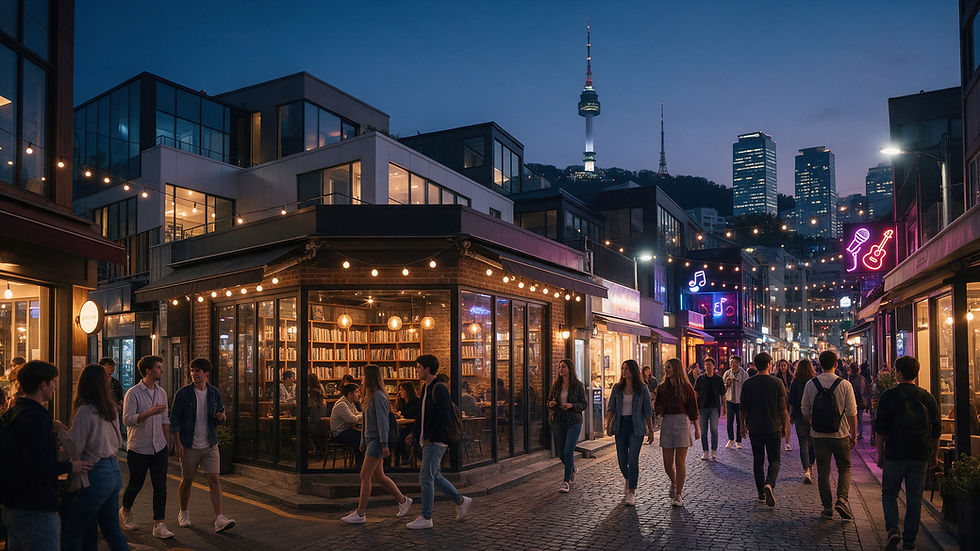
A drama location becomes somewhere to walk through. A beauty trend becomes an appointment. A fashion brand becomes a store to discover. A food seen on screen becomes something to taste. The distance between pop culture and travel keeps getting smaller.
Beyond Seoul, the Experience Changes
South Korea's appeal isn't limited to its capital. Travel beyond Seoul introduces a different rhythm, from the coastal landscapes of Busan to the volcanic scenery of Jeju and the historic atmosphere of cities and towns across the country. This matters because the Korean travel experience becomes much richer when modern culture is placed alongside older traditions and natural landscapes.
A traveler can move from Seoul's futuristic shopping districts to a historic palace, then later discover coastal scenery, mountain landscapes or traditional architecture elsewhere in the country. Even beauty and fashion connect to this broader journey. Traditional clothing such as hanbok remains part of Korea's cultural identity, while modern versions reinterpret its silhouettes for contemporary lifestyles.
The contrast is part of the fascination: Korea doesn't ask travelers to choose between old and new, it puts them next to each other.

Why Korea Feels Different From a Traditional Shopping Trip
There is an important distinction between traveling somewhere to shop and traveling somewhere where shopping, beauty and lifestyle are part of the destination itself. South Korea increasingly belongs to the second category.
A beauty appointment can become a cultural experience. A fashion district can become a neighborhood exploration. A café can become part of a day's itinerary. A skincare purchase can carry a memory of the street where it was discovered. That makes consumption feel less separate from tourism.
The traveler isn't simply buying Korean products. They are experiencing the environment that produced the trends and that may explain why South Korea has become so compelling to travelers who are interested in fashion and beauty. The country offers access not only to products, but to the culture, spaces and visual language surrounding them.
The New Korean Travel Experience
Perhaps the most interesting thing about South Korea is that its modern tourism identity doesn't depend on a single attraction. It is an ecosystem. Beauty leads to shopping, shopping leads to neighborhoods, neighborhoods lead to cafés and food, pop culture leads to filming locations and fashion leads to design. Traditional culture provides another layer beneath all of it. The result is a destination where travelers can build highly personal itineraries around what interests them most.
Someone might come for K-pop and leave fascinated by Korean architecture. Another might arrive for skincare and discover fashion. A fashion enthusiast might become interested in traditional crafts, food or regional travel. South Korea makes these discoveries unusually easy.
It is a country where culture doesn't sit neatly inside museums or monuments. It moves through streets, stores, salons, cafés, screens and everyday life and perhaps that's why traveling through South Korea can feel so contemporary. You don't simply visit the trends. For a while, you live inside them.


Comments