
Thailand: A Fashion Destination Shaped by Tourism

Updated: Aug 7
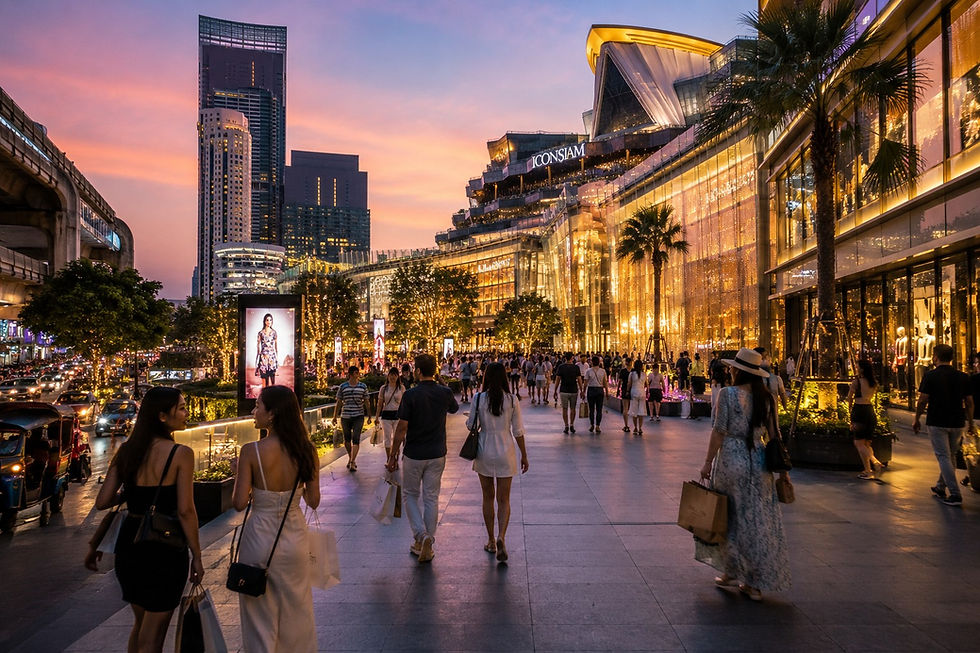
Thailand has long been one of the world's most visited travel destinations. Its white-sand beaches, bustling street markets, luxury resorts, vibrant nightlife, and rich cultural heritage attract millions of visitors every year. While tourism is often associated with hotels, restaurants, and transportation, its influence extends much further. One of the industries it quietly transforms is fashion.
Walk through Bangkok's shopping districts, browse the boutiques of Phuket, or explore the lively markets of Chiang Mai, and you'll notice something unique. Thailand's fashion industry is designed not only for the people who live there but also for the people constantly arriving from around the world. Tourists bring different tastes, purchasing habits, and cultural influences, creating an environment where fashion evolves faster than in many other markets.
Unlike countries where fashion trends are shaped almost entirely by domestic consumers, Thailand exists at the intersection of local identity and global demand. Every season, millions of international visitors influence what retailers stock, what designers create, and what consumers discover. Fashion becomes more than clothing—it becomes part of the travel experience itself.
This relationship between tourism and retail has helped create one of Southeast Asia's most dynamic fashion markets. It is also shaping how Thailand presents its creativity to the rest of the world.
Tourism Is More Than an Economic Engine—It's a Fashion Influencer
When people think about tourism, they often imagine beaches, temples, or street food. Fashion rarely enters the conversation, yet every tourist arriving in Thailand becomes a potential customer for local retailers, designers, and shopping destinations. Visitors don't simply spend money on souvenirs. They buy summer clothing for the tropical climate, accessories for beach holidays, footwear for exploring cities, and locally designed products they cannot find at home. These purchasing decisions influence which products retailers prioritize and which collections brands develop throughout the year.
The diversity of Thailand's visitors makes this influence even more significant. Travelers arrive from Europe, North America, China, Japan, South Korea, Australia, India, and the Middle East, each bringing different style preferences. Fashion retailers have learned to balance these international tastes while maintaining a distinctly Thai identity. Instead of creating collections that appeal to only one demographic, many businesses design products that feel globally wearable while remaining connected to local culture.
Tourism also accelerates trend adoption. International visitors expose retailers to new styles while simultaneously taking Thai fashion back to their own countries through social media. A dress purchased in Bangkok may appear on Instagram in London, Berlin, or Sydney within days, giving local designers visibility far beyond Thailand's borders. In the digital age, every traveler can become an ambassador for Thai fashion without even realizing it.
Bangkok: A Global Fashion Marketplace
Bangkok is often described as one of Asia's great shopping cities, and for good reason. Luxury malls stand alongside bustling street markets, independent boutiques share neighborhoods with global fashion brands, and emerging designers find space in a retail landscape that welcomes both experimentation and commercial success.
This variety reflects the city's unique role as a destination for both local shoppers and international visitors. Tourists may begin their day browsing premium collections inside modern shopping centres before ending the evening negotiating prices at vibrant night markets. That combination of luxury, affordability, and discovery is one of Bangkok's greatest retail strengths.

For fashion brands, this creates a highly competitive environment. International labels compete for tourist spending, while Thai designers work to offer products that feel authentic rather than mass-produced. Many succeed by combining modern silhouettes with subtle references to local craftsmanship, traditional textiles, or tropical lifestyles. The result is a fashion ecosystem that feels contemporary without losing its cultural identity.
Bangkok also benefits from its position as a regional travel hub. Many visitors use the city as a gateway to Southeast Asia, exposing them to Thai fashion even if Thailand is only one stop on a longer journey. Every purchase becomes an opportunity for local brands to reach customers who may later continue shopping online from another country. Physical tourism increasingly creates digital customers.
Climate and Travel: A Distinct Fashion Identity
Thailand's tropical climate influences fashion just as much as tourism does. High temperatures and humidity encourage clothing that prioritises comfort, breathability, and versatility. Lightweight fabrics, relaxed silhouettes, linen shirts, cotton dresses, and resort-inspired styles have become staples not because they are fashionable in one particular season but because they suit everyday life.
Tourism reinforces these preferences. Visitors arriving for beach holidays or island escapes often purchase clothing designed specifically for warm weather, creating year-round demand for summer fashion. Unlike countries where seasonal collections shift dramatically between winter and summer, Thailand's retailers focus on garments that perform well in consistently warm conditions while remaining stylish enough for urban environments.

This has contributed to the popularity of resortwear beyond luxury hotels. What was once considered vacation clothing has increasingly become everyday fashion. Loose shirts, coordinated linen sets, comfortable sandals, woven accessories, and lightweight outerwear move seamlessly between beach destinations, city cafés, and shopping districts. Fashion reflects a lifestyle built around movement, relaxation, and outdoor living.
The influence extends to international brands as well. Many adapt their product selections specifically for Thailand's climate and tourism patterns, recognising that shoppers are looking for clothing suited to travel rather than colder seasonal wardrobes. Climate and tourism together have helped shape a fashion market that feels practical without sacrificing style.
Thai Designers: Creating Fashion With Global Appeal
Tourism has done more than increase retail sales. It has provided local designers with direct access to an international audience. Unlike many emerging fashion markets that rely heavily on exports or overseas fashion weeks, Thailand allows designers to present their work to global consumers without leaving the country. Every tourist walking into a boutique represents an opportunity to introduce Thai creativity to someone who may never have encountered it before.
This exposure encourages designers to think internationally while remaining rooted in local culture. Contemporary Thai fashion often blends clean modern aesthetics with subtle cultural references, creating collections that appeal to a global audience without feeling generic. Rather than copying international trends, many designers reinterpret them through Thailand's own creative perspective.

Social media has amplified this opportunity. Visitors frequently document shopping experiences, outfit choices, and discoveries during their trips, giving independent brands visibility that traditional advertising could never achieve alone. A well-designed boutique or thoughtfully crafted garment can reach thousands of potential customers through a single travel post.
The relationship between tourism and branding highlights an important lesson for emerging fashion industries. As we explored in Can Indian Fashion Move Beyond Price Competition? The Road to Building Global Brands, manufacturing alone rarely creates lasting international recognition. Building memorable brands requires storytelling, customer experience, and emotional connection. Tourism offers Thai designers a powerful platform to begin building those relationships.
The Future: Can Tourism Help Thailand Build Global Fashion Brands?
Tourism has undoubtedly strengthened Thailand's fashion industry, but its long-term value may lie beyond immediate retail sales. Every international visitor who discovers a Thai fashion brand represents a potential future customer. As e-commerce and social commerce continue to expand, brands are no longer limited to selling only while tourists remain in the country. A purchase made during a holiday can become the beginning of a long-term relationship maintained through online stores, international shipping, and digital communities.
This creates opportunities that previous generations of designers never had. Fashion brands can use tourism as a gateway to global expansion, turning physical retail experiences into international brand awareness. The challenge is ensuring that visitors remember more than a shopping trip—they remember the brand itself.
Competition, however, is becoming more intense. International fashion retailers continue expanding across Southeast Asia, while online marketplaces give consumers access to products from almost anywhere in the world. Thai brands will need to differentiate themselves through quality, creativity, sustainability, and authentic storytelling rather than relying solely on tourist traffic.
The future of Thailand's fashion industry will depend on how successfully it transforms visitors into loyal customers. Tourism can introduce consumers to a brand, but lasting success comes from delivering products and experiences people want to return to long after their holiday has ended.
Thailand has already proven that tourism can shape fashion trends, retail strategies, and consumer behavior. The next challenge is even more ambitious—to turn one of the world's most popular travel destinations into a country known not only for where people shop on vacation but for the fashion brands they continue choosing long after they return home.


Comments